



WooCommerce development and integration
Cloud Bilişim develops and integrates WooCommerce stores for businesses in Türkiye. Product structure, payments, shipping, invoicing and stock connections are planned around the order journey and the systems your team uses to fulfil sales.
What should you test before launching a WooCommerce store?
Test representative orders, payments, cancellations, stock changes, invoices and shipping updates. Check that information reaches the connected systems correctly and that the team can handle failed or duplicate transactions.
Related services and next steps
Website design for businesses in Türkiye, Custom website development, Contact Cloud Bilişim.
What is WooCommerce?
WooCommerce is an open-source e-commerce infrastructure that runs on WordPress. It is one of the most widely used e-commerce software in the world, and the software itself is free.
The main important thing is this: A store established with WooCommerce runs on your server, under your control . On a rented platform, your store resides on the provider’s system; when the subscription ends, the store also closes. In WooCommerce, the software, data, and customer list belong to you.
There is also a counterpart to this: the setup, security, speed, and updates of the store are now your responsibility. This is precisely where we step in — we take over the operation of the store, from setup to integrations, from speed optimisation to regular maintenance.
Setting up the store Together with WordPress has another advantage: your corporate site, blog, and store are managed on a single structure, from a single panel.
Whose Store Is It?
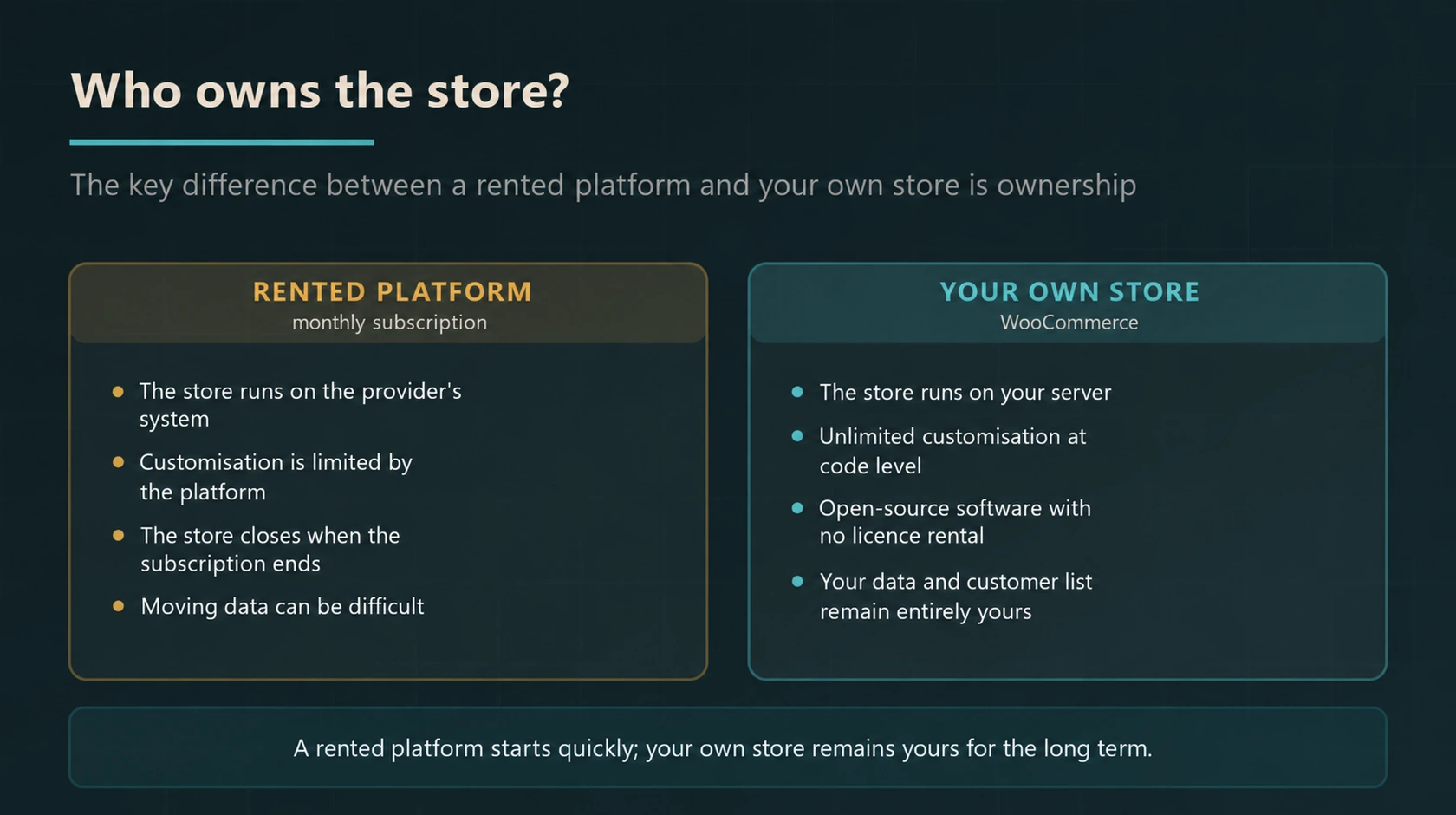
We are not criticizing rental platforms; they are a reasonable way for small stores that want to start quickly and do not want any technical burden. But as revenue grows, two things start to become bothersome: customisations not allowed by the platform and monthly rental fees. WooCommerce eliminates both of these limitations.
What Does WooCommerce Connect To?
In an e-commerce project, the main task is not to open the store, but to connect it to the operating systems. A store can be opened without integrations, but it cannot be operated.
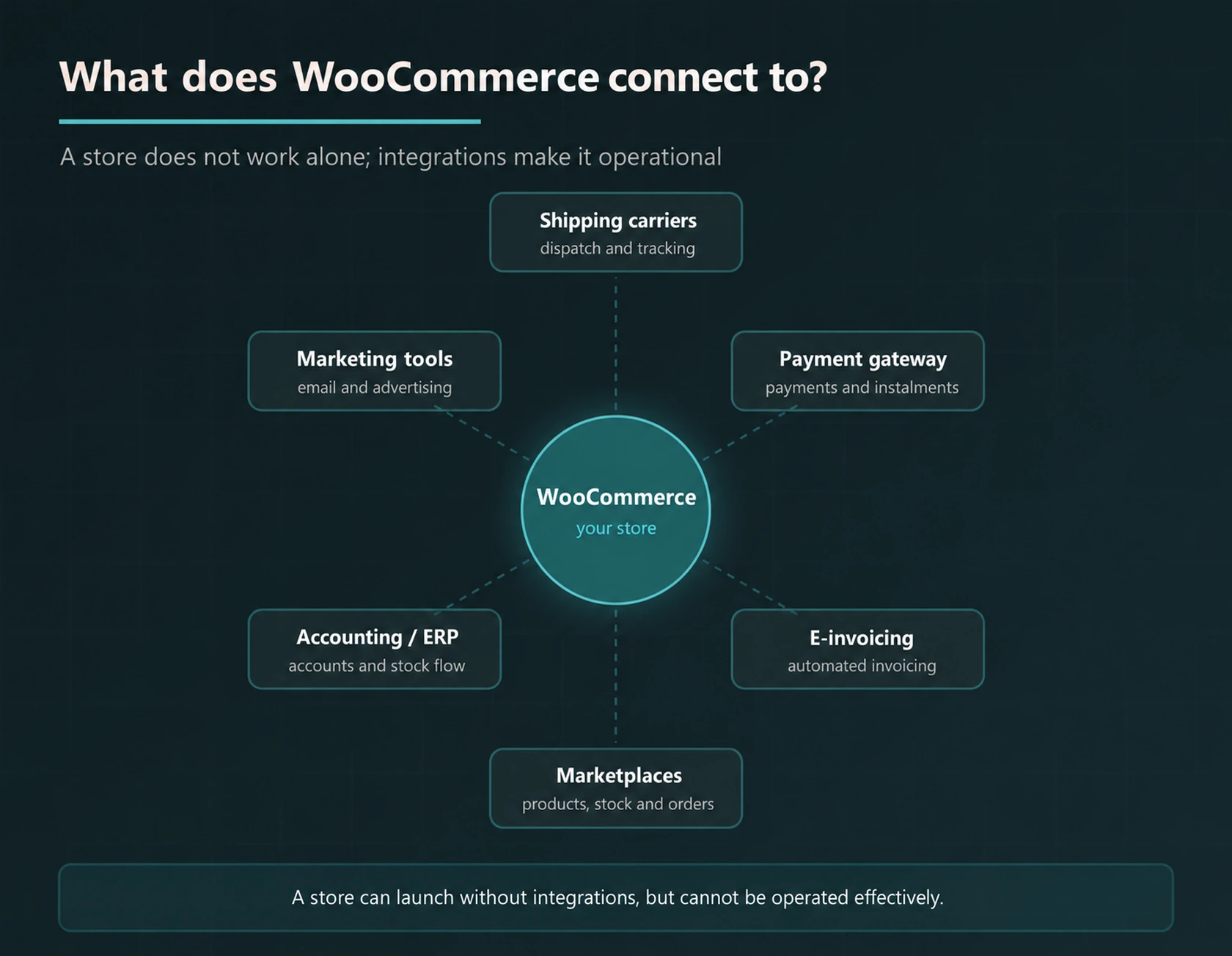
Cargo Integration
When an order is confirmed, a shipment is automatically created with the courier company, the tracking number is registered to the store, and it is communicated to the customer. The need to enter the courier panel one by one to cut barcodes is eliminated.
Virtual POS and Payment
Bank virtual POS systems and payment providers are connected to the store; installment options, 3D Secure verification, and refund processes are configured.
e-Invoice and e-Archive
When the order is completed, the invoice is automatically issued and sent to the customer. The need to manually enter data into the accounting side is largely eliminated.
Marketplace Integration
The flow of products, prices, stock, and orders is synchronised with marketplaces such as Trendyol, Hepsiburada, N11, and Amazon. You don’t have to update the same product in two places separately.
How Does an Order Progress?
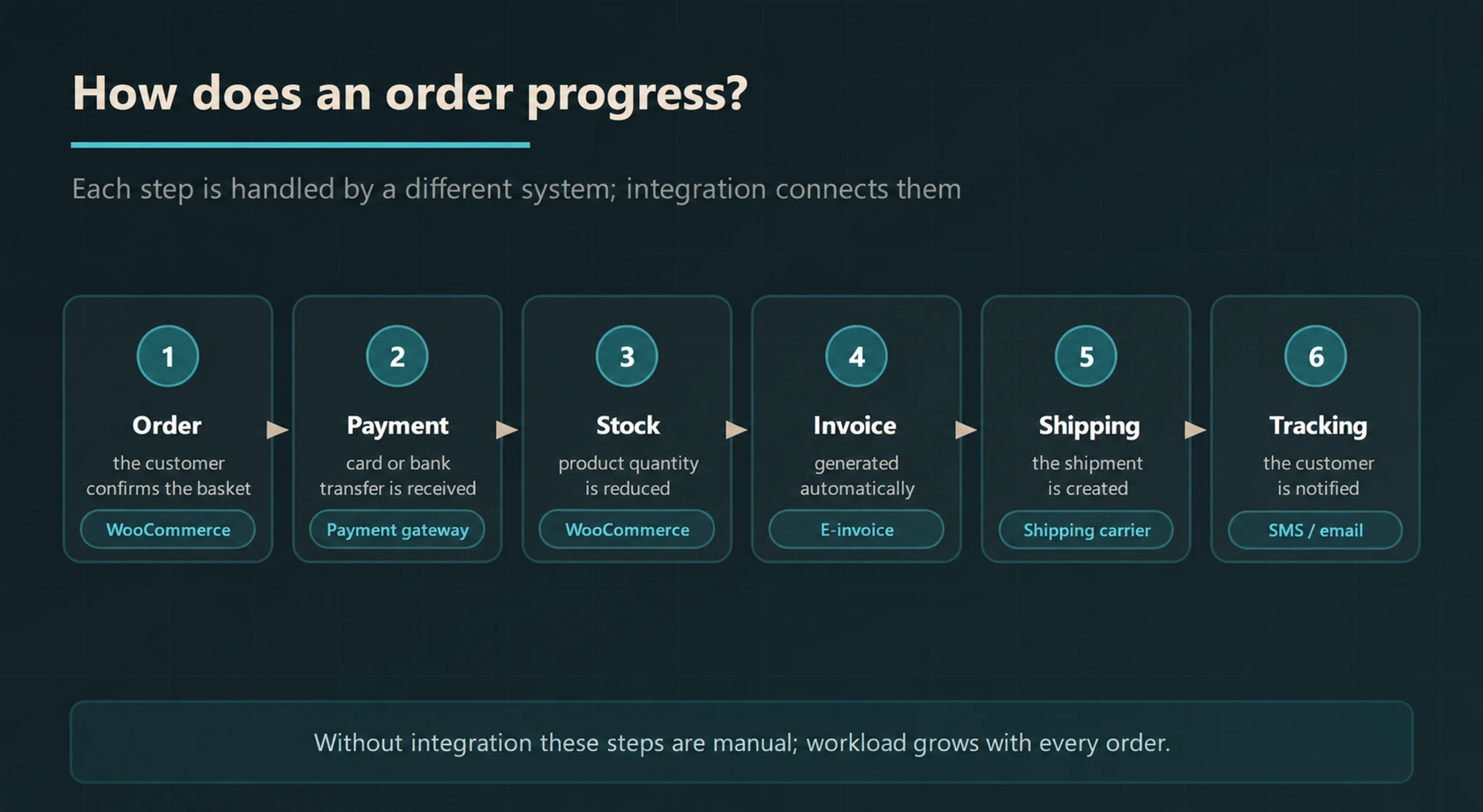
Each step is carried out by a different system; integration connects them to each other.
Scope of Our Service
- Installation and Configuration
WooCommerce is installed; currency, tax, shipping regions, order statuses, and email notifications are configured. - Store Design
Product listing, product detail, cart, and payment pages are designed according to sales; the number of steps is reduced. - Product Transfer
Your existing products are transferred in bulk along with variations, images, and stock information. - Payment Infrastructure
Integration of virtual POS and payment provider, installment definitions, and 3D Secure configuration. - Cargo Integration
Shipment creation, tracking number transfer, and customer notification are automated. - e-Invoice Integration
Automatic invoice issuance and data flow with accounting software are established.
- Marketplace Connections
Product, stock, price, and order synchronisation; multi-channel sales from a single panel. - Speed Optimisation
As the number of products increases, cache, visual, and database adjustments are made in stores that slow down. - Security
SSL, login protection, regular updates, and backup routines are established. - Custom Development
Code is written for business rules that ready-made plugins do not cover. - Training
The use of product addition, order management, return, and reporting screens is demonstrated. - Continuous Maintenance
Updates, integration tracking, and problem intervention are carried out within the maintenance agreement.
WooCommerce Not Suitable for Every Store
If the number of products is very high, if you have non-standard pricing or ordering logic, or if the store will operate like an application, WooCommerce may struggle. In these cases, a structure written from scratch is healthier; for details custom software e-commerce systems .
We do not say which one is correct without discussing your product count, order volume, and business rules.
How should a WooCommerce store prepare for launch?
During store delivery, check not only the visibility of the products but also the entire order lifecycle. Successful and failed payments, cancellations, returns, stock reductions, shipping information, and notifications sent to the customer should be tested together.
Product variations, tax, and shipping rules should be clarified with real product examples. It should also be decided which system will be the primary source for stock and pricing in accounting or marketplace integration.
In the WooCommerce offer, separate the setup fee from hosting, paid plugin renewals, payment commissions, and technical maintenance. Evaluate performance needs not only by the number of products but also by traffic, filtering, and concurrent order load. If there are special sales rules where ready-made infrastructure is insufficient, compare the custom e-commerce software option.
Frequently Asked Questions
Is WooCommerce free?
The software itself is open source and free; you do not pay a monthly licence fee for usage. The cost consists of hosting, installation and design labor, some commercial plugins needed, and integration developments. The difference from rental platforms is that the majority of this cost is one-time and the store remains yours.
Why WooCommerce instead of a rental e-commerce platform?
For two reasons: ownership and flexibility. The store runs on your server, the data and customer list stay with you, and the store does not close when the subscription ends. Furthermore, customisation is not limited to what the platform allows; code can be written according to your business rules. However, there is responsibility for installation, security, and maintenance — we take on this as well.
Do you provide shipping and virtual POS integration?
Yes. On the shipping side, when the order is confirmed, the automatic creation of the shipment is set up, the tracking number is processed in the store, and it is communicated to the customer. On the payment side, bank virtual POS and payment providers are connected; installment options, 3D Secure, and refund processes are configured.
e-Invoice integration possible?
Yes. When the order is completed, the e-Invoice or e-Archive invoice is automatically issued and sent to the customer. Data flow to your accounting software can also be established; thus, the need to manually enter orders into accounting is largely eliminated.
Can it integrate with Trendyol and Hepsiburada?
Yes. We set up product, price, stock, and order synchronisation with marketplaces like Trendyol, Hepsiburada, N11, and Amazon. This way, you don’t have to update the same product separately on each channel, and you prevent cancellations caused by stock inconsistencies.
What do you do if my store slows down?
WooCommerce stores usually slow down due to the number of products and plugin accumulation. First, we measure and find where the bottleneck is; then we perform cache configuration, image compression and WebP conversion, database maintenance, and cleanup of unnecessary plugins. If necessary, server resources are also resized.
Can you move my existing store to WooCommerce?
Yes. Products are transferred along with variation, visual, and stock information, customer records, and order history as much as possible. If product addresses change, redirection is set up to ensure that the existing ranking in search engines is not lost.
When is custom software needed instead of WooCommerce?
If the number of products is very high, if you have non-standard pricing or order logic, if you plan to set up a multi-layered structure like dealers and B2B, or if the store needs to operate like an application, custom software is healthier. In this case custom software e-commerce systems we recommend this approach.
Our Relevant Services
For the site on which the store will operate WordPress website and website design, for custom business rules WordPress plugin development and custom software e-commerce systems, for infrastructure cloud server services, for data security cloud backup and for regular maintenance corporate maintenance agreement You can check our pages.
Let’s Talk About Your Store
How many products do you have, which shipping and payment infrastructure do you use, do you sell on marketplaces, which software do you use on the accounting side? These questions determine both the correct setup and the realistic timeline.
To meet you can contact us.