


Mobile app development for iOS and Android
Cloud Bilişim provides mobile app development for iOS and Android, covering customer services, field teams and internal business workflows. We plan screen design, user permissions and API connections around the way people will use the app every day.
What should you decide before commissioning a mobile app?
Identify the users, supported platforms, required device features and systems the app will connect to. Agree who owns the app-store accounts, who approves each release and what support you need after launch.
Related services and next steps
SaaS application development, Custom e-commerce development, Contact Cloud Bilişim.
Custom Mobile App Development for iOS and Android
Our mobile app development service helps your business reach its users on their phones. We design each app around your needs and build it to run quickly and reliably. In addition, we tailor the iOS and Android structure to your project. User experience and performance stay a priority at every stage.
We plan the design in Figma, so you can check that each screen is easy to use before coding starts. Then, during development, we build a scalable and secure infrastructure with modern technologies.
Our Mobile Application Development Services
- Native Mobile Applications (Swift, Kotlin)
For projects that need maximum performance, we write platform-specific code.
Cross-Platform Mobile Applications (Flutter, React Native)
One codebase serves both iOS and Android. On many projects, this can shorten delivery and lower cost. - API & Backend Development
We develop the API infrastructure, data management and security layers your app needs. - UI/UX Design (Figma)
We design user-centred interfaces in Figma, following current UX/UI practice. - Integration Services
Integration with payment systems, map services, CRM, ERP, e-commerce, and other third-party software. - Testing, Optimisation, and Publishing
We manage app testing, performance tuning and the App Store and Google Play submission process.
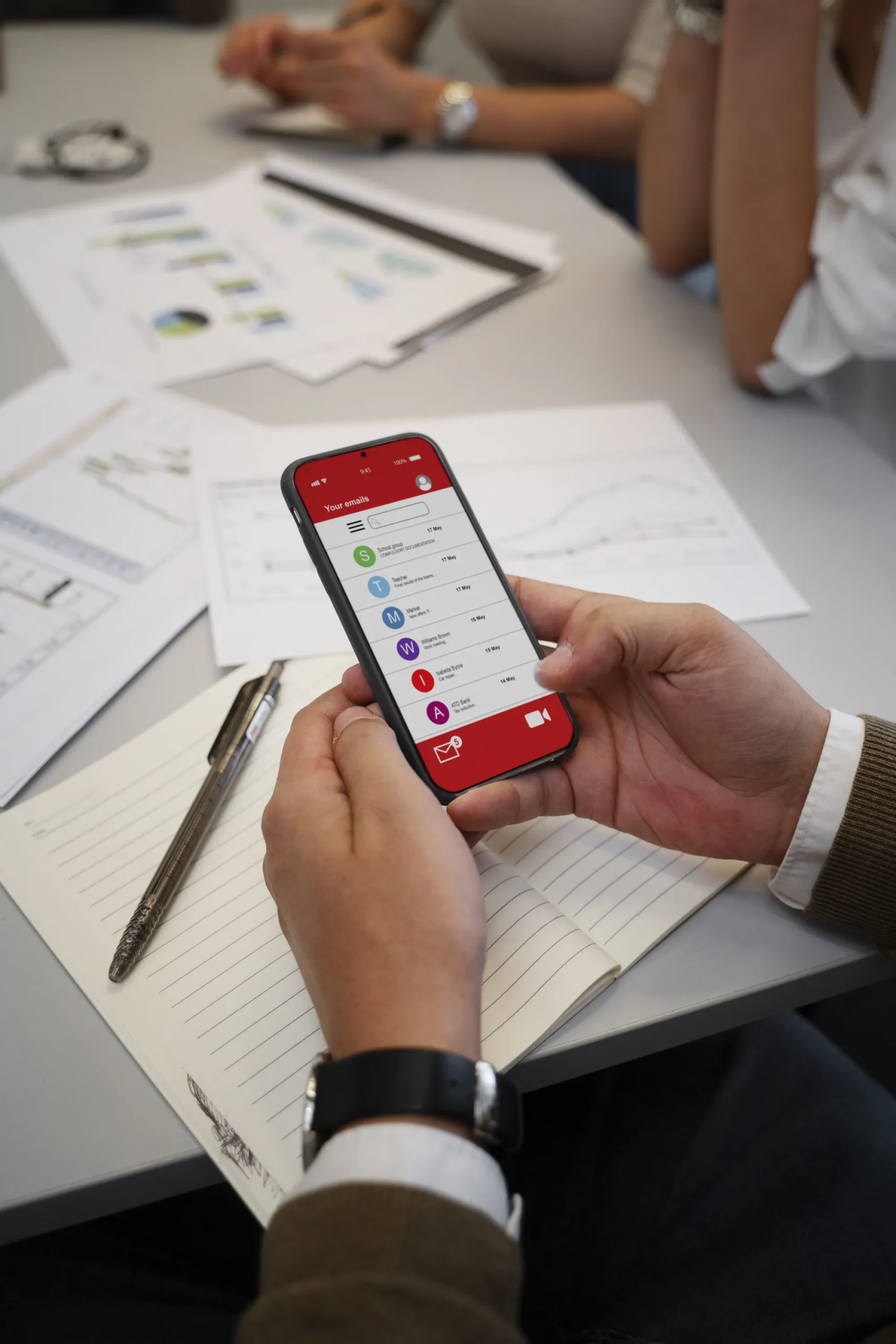
All visuals come from real projects and appear with permission.
What Types of Applications Do We Develop?
- E-commerce mobile applications
- B2B mobile platforms
- CRM / ERP mobile solutions
- Service, reservation, and appointment applications
- Social media applications
- Map, location, and IoT-based projects
- Enterprise business management applications
- Custom projects
- StartUp Projects
Fully Compatible Systems with Extensive Integration Infrastructure
We design every custom solution with integration in mind. This applies to mobile apps, e-commerce platforms, CRM and ERP systems, production automation and B2B portals. As a result, we can connect the app to the systems your processes rely on. You can then manage your operations from one place.
With a modern API architecture, our projects can connect to payment providers, accounting systems, marketplaces, shipping services and map services. They can also work with communication tools, enterprise software and IoT platforms, depending on each service’s API access. This way, you can build a secure and largely automated setup around your business model.
A stable and scalable integration layer gives each department up-to-date access to the data it needs. It also supports your wider digital transformation work.
The aim is to reduce repetitive manual work and to move data between processes in a more orderly way.
We offer end-to-end integration solutions so that you can manage all your business processes from a single central system.
What should you clarify before mobile app development starts?
When choosing a mobile app development company, do not compare only the number of screens. User roles, offline use, notifications, device permissions and existing CRM or ERP integrations all change the delivery scope. Base the choice between native and cross-platform on the device features you need and your long-term maintenance requirements.
- Separate the user journeys for the first version from the features you will leave for a later release.
- Document who is responsible for API access, server costs, and store accounts.
- Evaluate real device testing, bug fixing periods, and operating system updates separately in the proposal.
What determines the cost of mobile app development?
The number of platforms, complexity of screens, integrations, payment flows, and test coverage determine the cost. In addition to the design and development fee, budget for hosting, third-party services and maintenance.
Does publishing on the App Store and Google Play come with a guarantee?
No. We can include store preparation and submission in the project scope. However, the final decision rests with each store’s review. Apple’s App Review Guidelines set out what its reviewers check. Before you submit, prepare privacy notices, permission explanations, account details and, if needed, a test account.
Can the mobile application connect to our existing software?
Yes, if your current system offers a suitable API and access permissions, we can design the connection. If there is no API, we assess the middleware you need separately. For back-end needs, see our custom software development service.
Mobile app development: technology and publishing
Which programming languages are used for mobile apps?
For native apps, we use Swift for iOS and Kotlin for Android. In projects that target both platforms with one codebase, we choose Flutter or React Native instead. Device features, performance needs and the maintenance plan decide the language.
Should I choose native or cross-platform development?
If the app needs deep access to device features such as the camera, Bluetooth or heavy graphics, native is usually the better fit. If standard screens and workflows dominate, cross-platform reduces time and cost in most projects. We make the decision together, based on the first-release scope and long-term maintenance.
How long does mobile app development take?
The number of screens, the integrations and the test scope determine the timeline. That is why we do not give a fixed duration before we see the scope. We recommend starting with a first release that covers the core user journeys. This way, you launch earlier and plan later features with real user feedback.
Do I need a mobile app or a website?
A mobile app makes sense if your users will open it often or if you need notifications or device features. If visitors come only occasionally, a mobile-friendly website or a PWA is often enough. Many businesses start with the web and then move to an app.
How do you publish a mobile app?
You need an Apple Developer account for iOS and a Google Play Console account for Android. We recommend opening both accounts in your company’s name. Next, we prepare the store images, descriptions, privacy policy and permission explanations. We manage the submission, but the final decision rests with the store review.